
Forget the "Magic Brain," It's Time to Build a Body
Why your AI is currently a genius trapped in a sensory deprivation tank.
I’m going to be blunt: most people are using Large Language Models (LLMs) the wrong way.
They treat them like a magic oracle. They ask a question, get a hallucinated answer about a document the AI has never seen, and then get annoyed when the “genius” model acts like a toddler.
Here’s the thing. The problem isn’t that the model is stupid. The problem is that it’s disconnected.
Think of an LLM like a world-class neurosurgeon who has been locked in a dark room with no internet, no books, and no memory of what happened five minutes ago. They have the capability to perform surgery, but they don’t have the tools, the patient’s records, or even a scalpel.
In the industry, we call the solution to this Context Engineering. But you can just think of it as “building the body” for the AI brain.
The Whiteboard Problem
Every AI model has a “context window.” Think of this as a physical whiteboard. Every word you type, every instruction you give, and every bit of data the AI looks up has to fit on that board.
Once the board is full? The AI starts erasing the top to make room for the bottom. This is why your chatbot suddenly “forgets” what you were talking about twenty minutes ago.
You can’t fix this by just “prompting better.” You fix it by building a system that manages that whiteboard for the AI.
How to Give Your AI a “Body”
If you want an AI that actually works in the real world, one that knows your private data and doesn’t just make stuff up, you need to build these four things:
- The Hands (Tools): An LLM can’t browse your live inventory or book a flight on its own. You have to give it “tools”. Basically, little pieces of code that the AI can choose to “grab” when it needs to do something in the physical world.
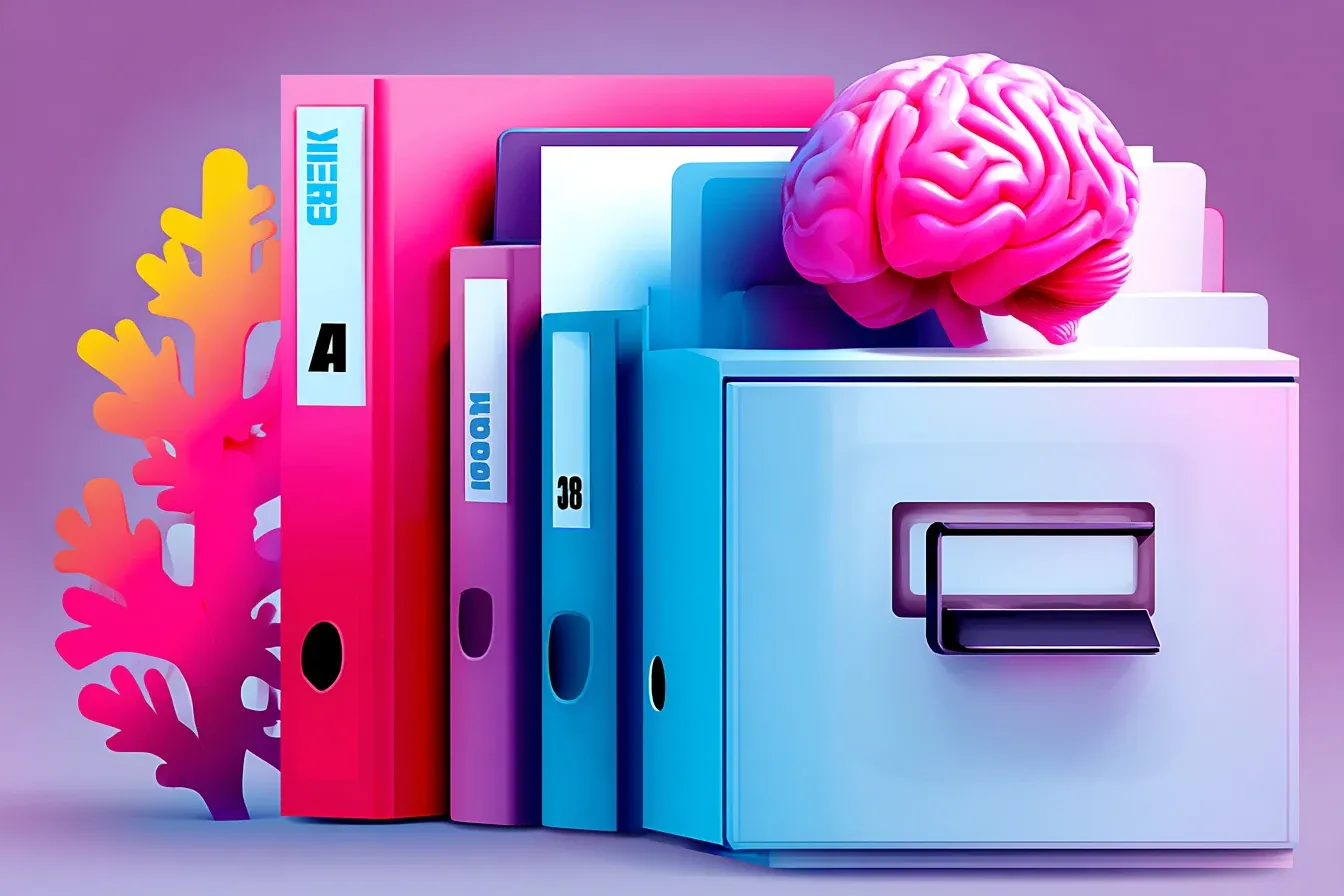
- The Filing Cabinet (Retrieval): Instead of trying to shove 1,000 PDFs into the AI’s brain (which will break that whiteboard we talked about), you store them in a database. When you ask a question, the system “retrieves” only the three most relevant paragraphs and hands them to the AI.
- The Sketchpad (Memory): You need a way to store “short-term” thoughts for multi-step tasks (like booking a complex trip) and “long-term” facts about the user. Without this, every conversation is a first date. And nobody wants to live in 50 First Dates.
- The Filter (Query Augmentation): Most people are terrible at asking questions. They’re vague. They’re messy. A good system takes a “messy” human query and translates it into a “precise” machine instruction before it ever touches the AI.
The Takeaway
Stop looking for the “perfect” model. Whether you’re using GPT-5.2, Opus 4.6, Gemini 3.1, or something open-source, the model is just the engine. Context Engineering is the car.
If you want a system that’s reliable enough for production, you need to stop being a “prompter” and start being an architect. Build the world the model lives in, and it will finally start acting as smart as it actually is.
Do this today: Take one task you’re trying to automate with AI. Instead of writing a longer prompt, ask yourself: What specific piece of information is the AI missing to get this right? Then, figure out how to “hand” it that info automatically.
Right?